Throughout the school year, students and teachers participating in our eTwinning project have been actively involved in a variety of educational, creative, and socially responsible activities aimed at strengthening digital skills, international collaboration, and awareness of the challenges faced by older adults in the digital era.
At the beginning of the project, surveys were conducted among both students and teachers in order to explore their knowledge and awareness of eTwinning projects. Following this initial phase, students took part in creative activities by designing project logos and posters. The best designs were selected through an online voting survey, encouraging active participation and collaboration among all project partners.
As part of the introductory activities, students and teachers also uploaded presentation posts about themselves to the eTwinning platform, helping participants get to know each other and strengthening communication between schools from different countries.
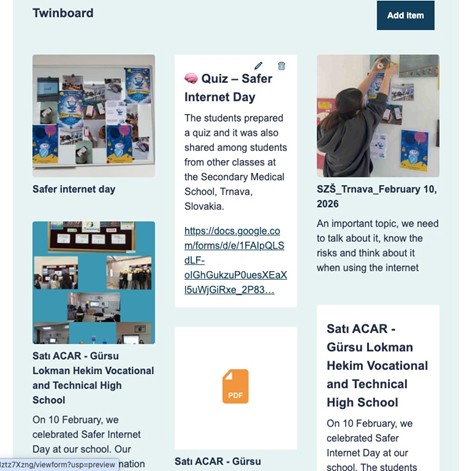
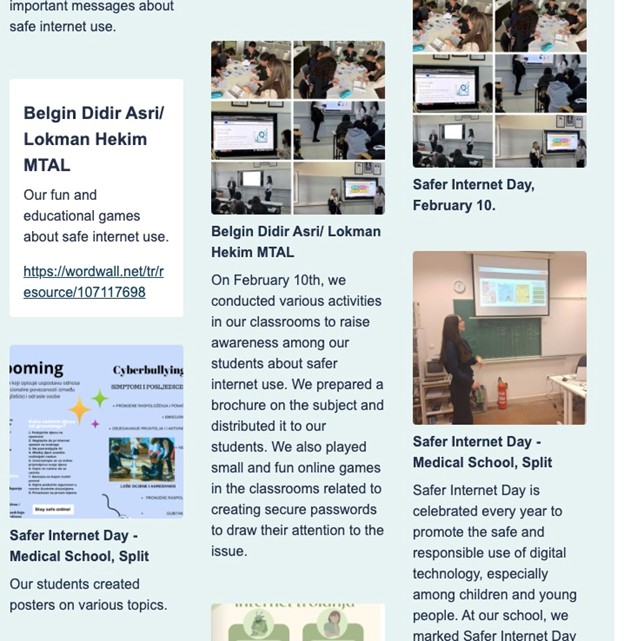
Special attention was given to digital safety and responsible internet use. On Safer Internet Day, celebrated on Tuesday, February 10, numerous activities were organized in schools. Students created interactive games focused on safe internet practices, while school bulletin boards were decorated with posters promoting e-safety and digital awareness. These activities encouraged students to reflect on the importance of responsible online behaviour and digital literacy in everyday life.
Another important project activity focused on the challenges older adults face during digitalization. Students identified common problems experienced by older people when using digital technologies and prepared posters presenting possible solutions and support mechanisms. The posters were later exhibited on school bulletin boards, helping raise awareness within the wider school community.
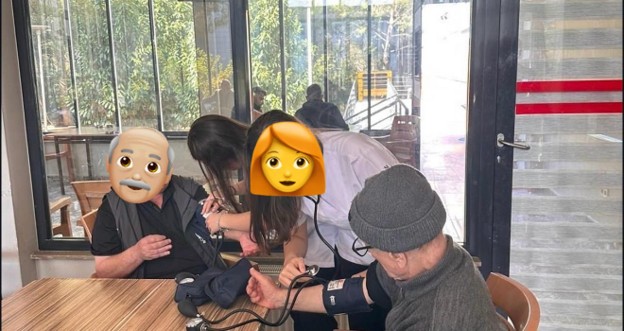
In April, students visited nursing homes or spoke with older adults in hospitals where they completed their internships. During these visits, they discussed the difficulties older individuals often experience when using digital technologies and applications. Students also provided practical support by helping older adults use digital tools more easily, demonstrating empathy, patience, and social responsibility through direct interaction.
The final project activity will take place in May. Mixed international teams have been formed, and students will collaboratively complete assigned tasks together with their peers from partner countries. The outcomes of these activities will then be combined into an interactive digital magazine, which will serve as the final product of the project and a showcase of the students’ creativity, teamwork, and learning experiences.
In addition, all activities carried out throughout the project are regularly shared on the schools’ websites, playing an important role in the dissemination and visibility of the project and its results.