The conference organised by the Secondary Medical School on 18 March 2026 was one of the key activities of the INVITE project. The event represented an important milestone in promoting digital transformation in healthcare education while emphasising the importance of maintaining a human-centred approach in healthcare professions.
The conference, titled “Think Digitally, Act Humanely: Healthcare Today and Tomorrow” (in Slovak: Myslieť digitálne, konať ľudsky: Zdravotníctvo dnes a zajtra), aimed to explore how digital technologies can be effectively integrated into healthcare systems while preserving empathy, communication, and patient-centred care as core professional values. The programme combined expert lectures, student presentations, and professional discussions addressing both the opportunities and challenges brought by digitalisation.
Preparations for the conference began already in autumn 2025 due to the organisational complexity of the event and the involvement of numerous external experts and institutions. The organisers initially expected around 40 external participants; however, the final number exceeded 50 guests from healthcare institutions, educational organisations, and regional authorities. In addition to invited guests, participants included the project team of teachers, 21 students actively involved in the INVITE project, school staff members, and several classes attending the conference sessions.
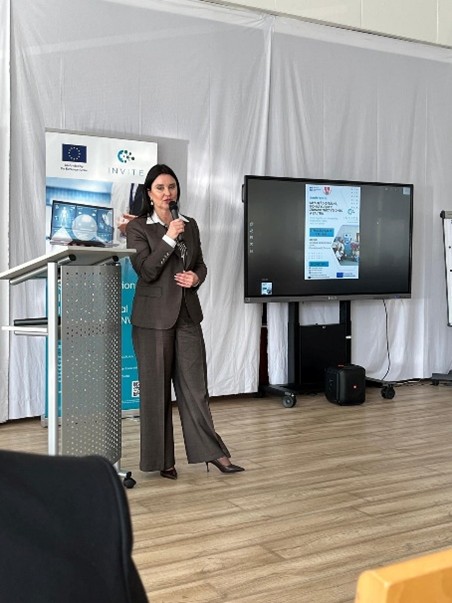
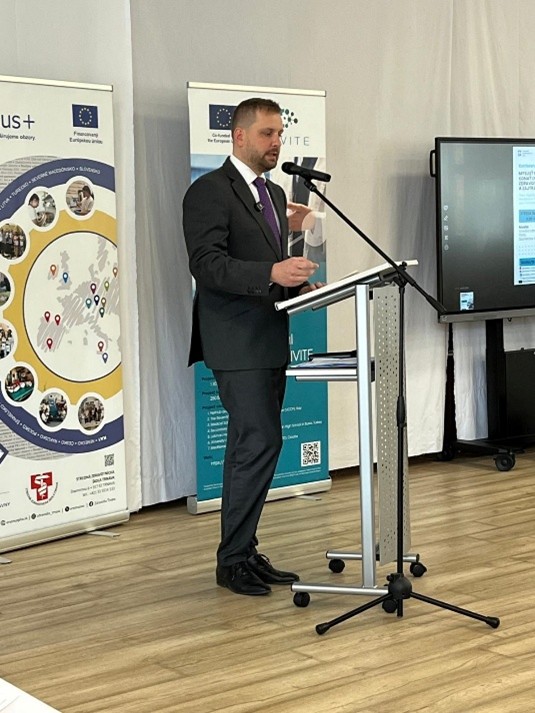
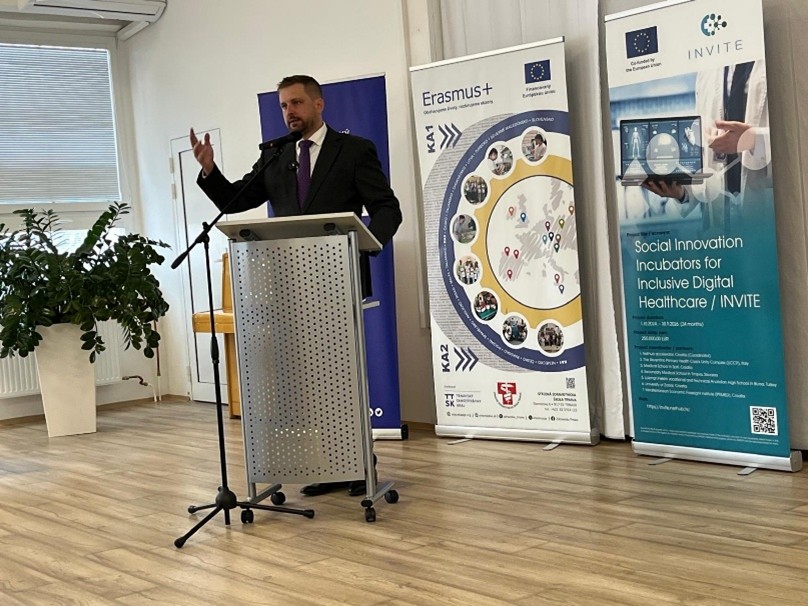
The conference programme successfully connected academia, clinical practice, and vocational healthcare education. The expert sessions focused on current topics such as digitalisation in education, humanoid robotics, diabetes care, the DRG system, digital pathology, the use of artificial intelligence in outpatient care, and innovations in physiotherapy. Through these topics, participants had the opportunity to discuss modern trends shaping the future of healthcare systems across Europe.
The conference was officially opened by the school principal, Katarína Hrašnová, who welcomed distinguished guests and invited the Minister of Health of the Slovak Republic, Kamil Šaško, to deliver an opening speech. He was followed by the President of the Trnava Self-Governing Region, Jozef Viskupič. Both speakers highly appreciated the initiative and highlighted the importance of innovation, digital competences, and international cooperation for the future development of healthcare and education in Slovakia.
The conference moderator, vocational teacher Marianna Bullová, guided the programme and introduced the central theme of digitalisation in healthcare to the audience throughout the event.
Special attention was dedicated to the presentation of the INVITE project (2024–2026), an Erasmus+ KA210 VET project supporting the development of digital and innovation competences among students and teachers from healthcare schools. The project coordinator, Ingrid Juhásová, introduced the project objectives, activities, and results achieved so far, as well as the international cooperation involving partner institutions from Turkey, Croatia, Italy, and Slovakia. She highlighted the importance of sharing experiences and good practices among partner organisations.
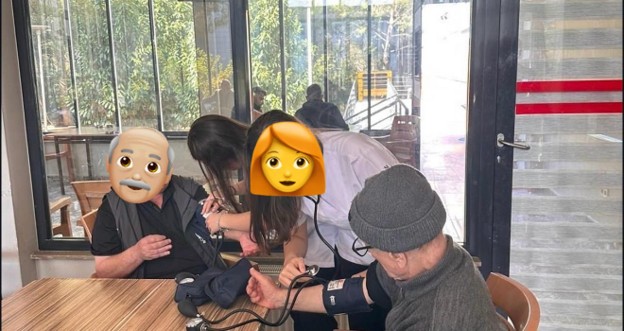
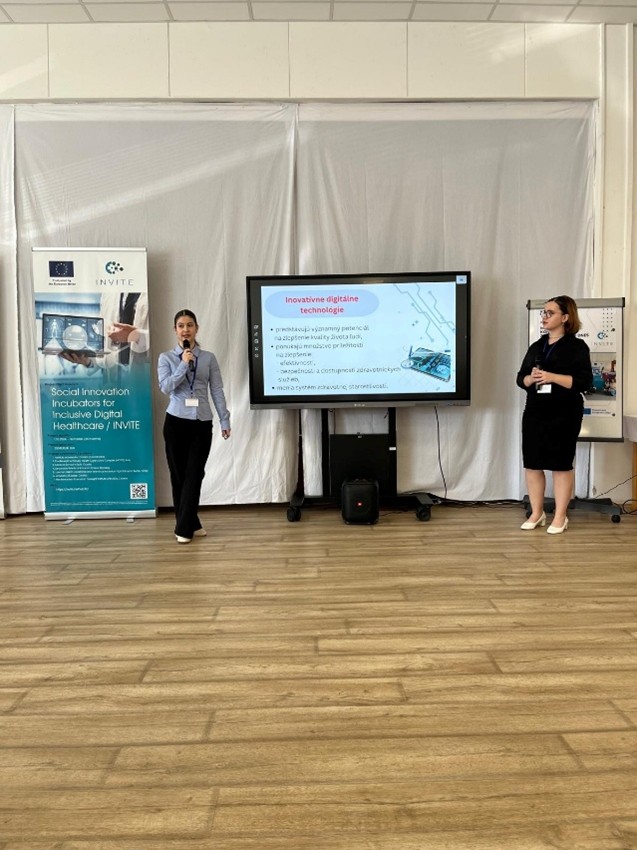
Students actively involved in the project also contributed to the programme. Nina Vozárová (3.B) and Ellen Brinzová (2.A), students of the Practical Nurse study programme, presented activities focused on digital solutions supporting older people and improving healthcare accessibility in the context of digital transformation. Mia Danišková and Veronika Valentová (3.B) discussed the topic of vulnerable groups and the importance of preserving human needs and empathy in increasingly digitalised healthcare systems. Kristína Kolesová (3.C) introduced the basics of artificial intelligence and explained its growing role in healthcare practice. Adam Benča (3.F) shared his professional experience from ErasmusPRO mobility at the Rehabilitation Institute Kladruby in the Czech Republic, where he completed a three-month placement in physiotherapy.
The conference clearly demonstrated that technological innovation in healthcare must go hand in hand with the humanistic values of healthcare professions. Digitalisation should serve as a tool supporting quality, accessibility, efficiency, and inclusiveness of healthcare services, rather than replacing personal interaction and human care.
The event also strengthened cooperation between the school and healthcare institutions, supported networking among professionals, and contributed to the broader discussion on the transformation of healthcare education in Slovakia and Europe.